Merytt Book a first call
Work

What we found, and what we built.

From AI in your tools to websites. What was wrong, what we did, and where it is now.

The work

Five businesses, five different problems.

Client names withheld. References on request.

A creative studio · the operations engine

Live since handover.

What was wrong
The way work really moved through the studio lived in people’s heads. Nothing chased the work that was slipping.
What we did
We wrote their way of working down, in their words, and built it into one job system. On top of it: a morning chase, a Monday digest, and an “ask it” chat that answers from their own methods. It runs in their own private cloud.
Where it is now
Live since handover. The chase is waiting before anyone sits down, every run has named real overdue work, and it stays quiet when there is nothing to flag.
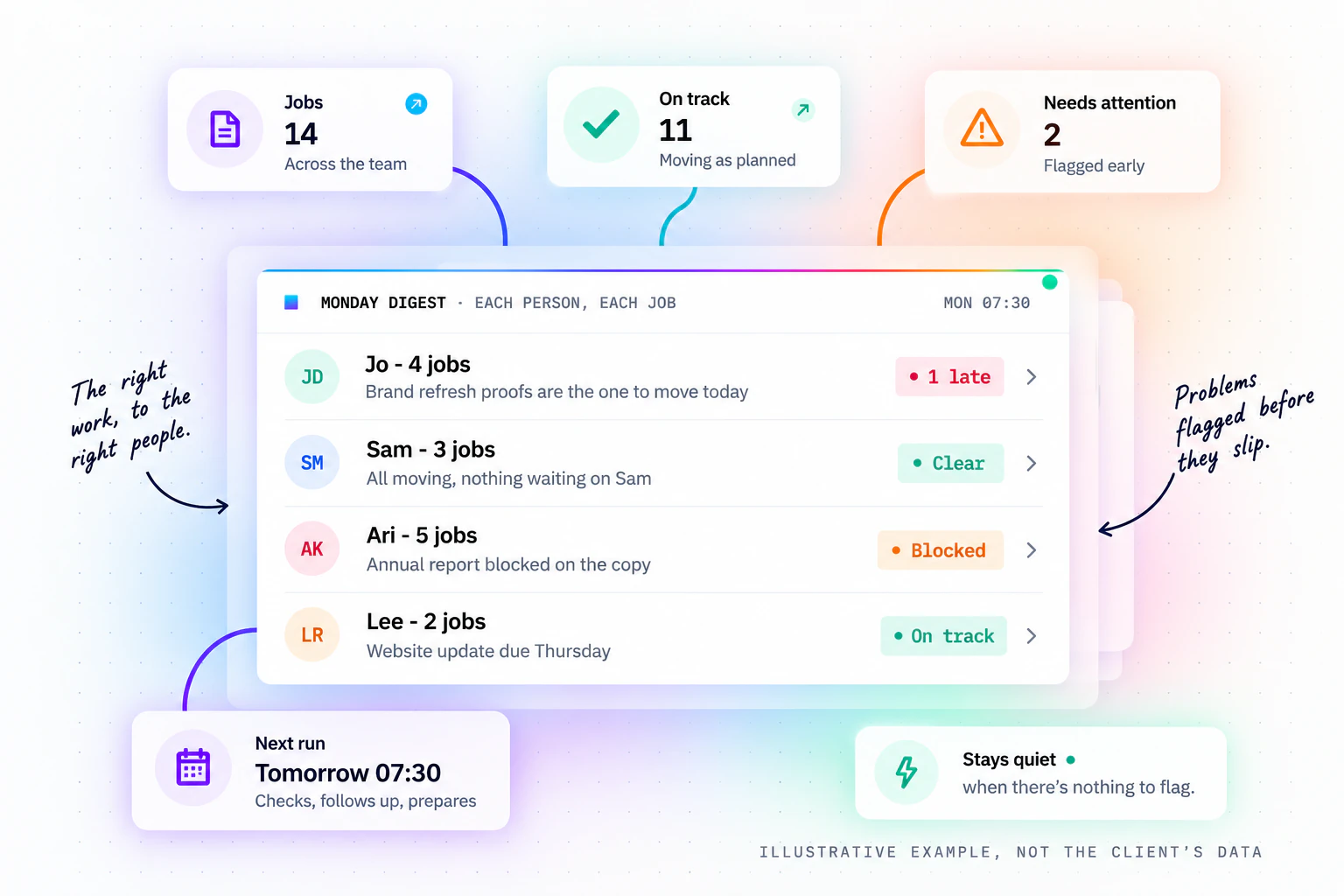
An illustrative example, not the client’s data. A Monday digest listing each person and their jobs: Jo has four with one late, Sam has three and is clear, Ari has five with the annual report blocked, and Lee has two on track. Above it, counts for jobs across the team, how many are moving as planned, and how many were flagged early. Beside it, notes reading the right work to the right people, and problems flagged before they slip.
Illustrative example, not the client’s data

A multi-site healthcare organisation · a supplier decision

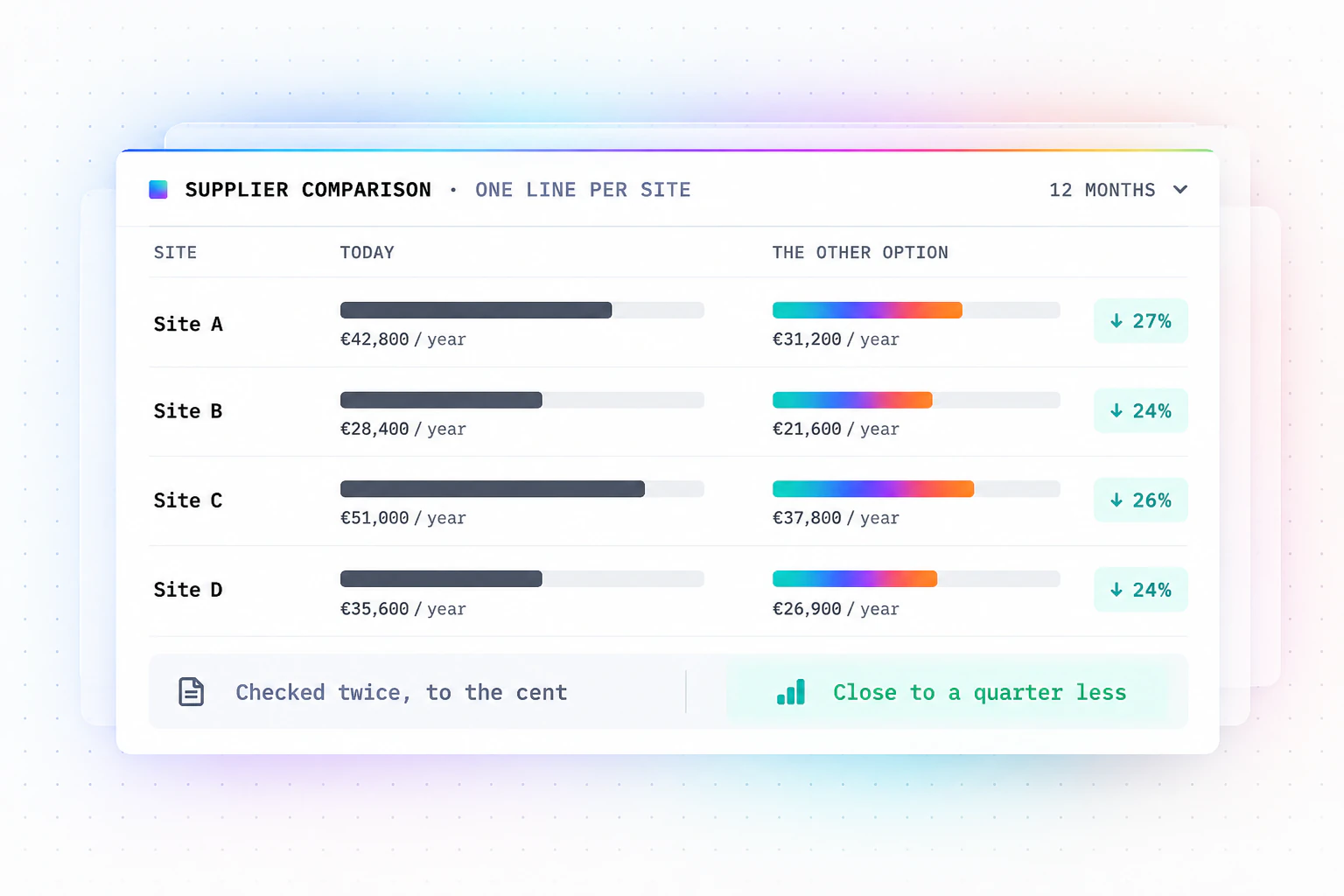
One option costs close to a quarter less.

What was wrong
They had to choose between two suppliers across every site. Each priced the work its own way, so nobody could compare them fairly.
What we did
We built an engine that read a year of bills from both. It priced every job on each supplier’s real contract terms, and traced every figure back to the bill. A second, separate check, built from the source papers, had to agree to the cent. Every site got its own line.
Where it is now
One option costs close to a quarter less, with the evidence for every site. The adviser took it into the decision meeting.
A supplier comparison with one line per site. For each of four sites, what it costs today against the other option, with the saving beside it: 27%, 24%, 26% and 24% lower. Underneath, two notes: checked twice to the cent, and close to a quarter less.
Illustrative example, not the client’s data

A consultancy · a launch

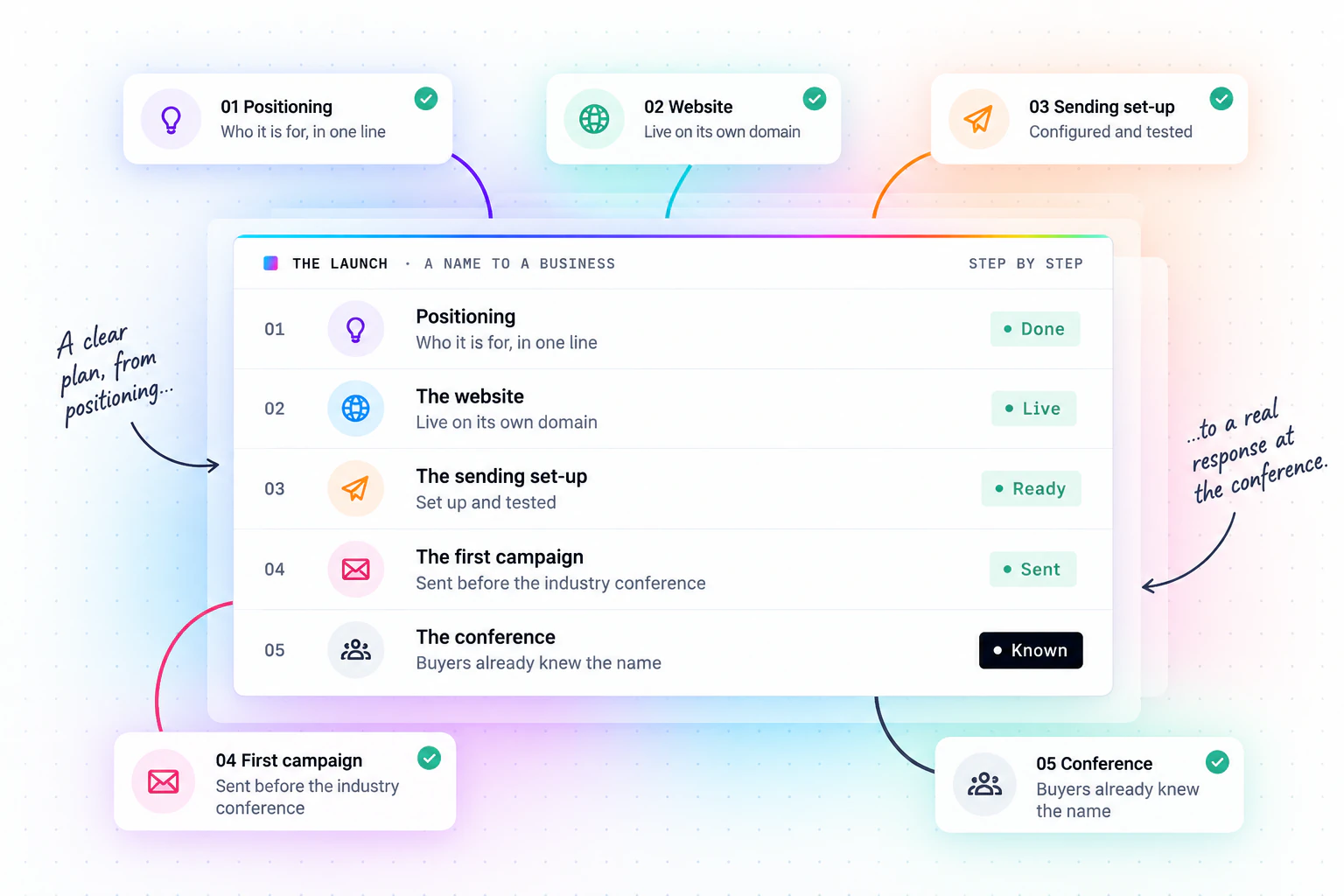
From a name to a business.

What was wrong
A good name, and no business around it yet.
What we did
The positioning, the website, the sending set-up and the first outbound campaign.
Where it is now
Launched. At the industry conference, buyers already knew the name from the emails.
A launch plan in five steps, each marked complete: positioning written in one line, the website live on its own domain, the sending set-up tested, the first campaign sent before the industry conference, and the conference itself, where buyers already knew the name.
Illustrative example, not the client’s data

A trades business · website

Four quote requests.

What was wrong
They had an ad running, and no website behind it.
What we did
We built the site and set up their social.
Where it is now
Four quote requests came in after.
Four quote requests arriving from a Google ad, the website, LinkedIn and email, all landing in one list from the new site, each marked new and timed from two hours to one day ago.
Illustrative example, not the client’s data

A product company · websites

All three are live.

What was wrong
A new product and a new partner, and no front door for either.
What we did
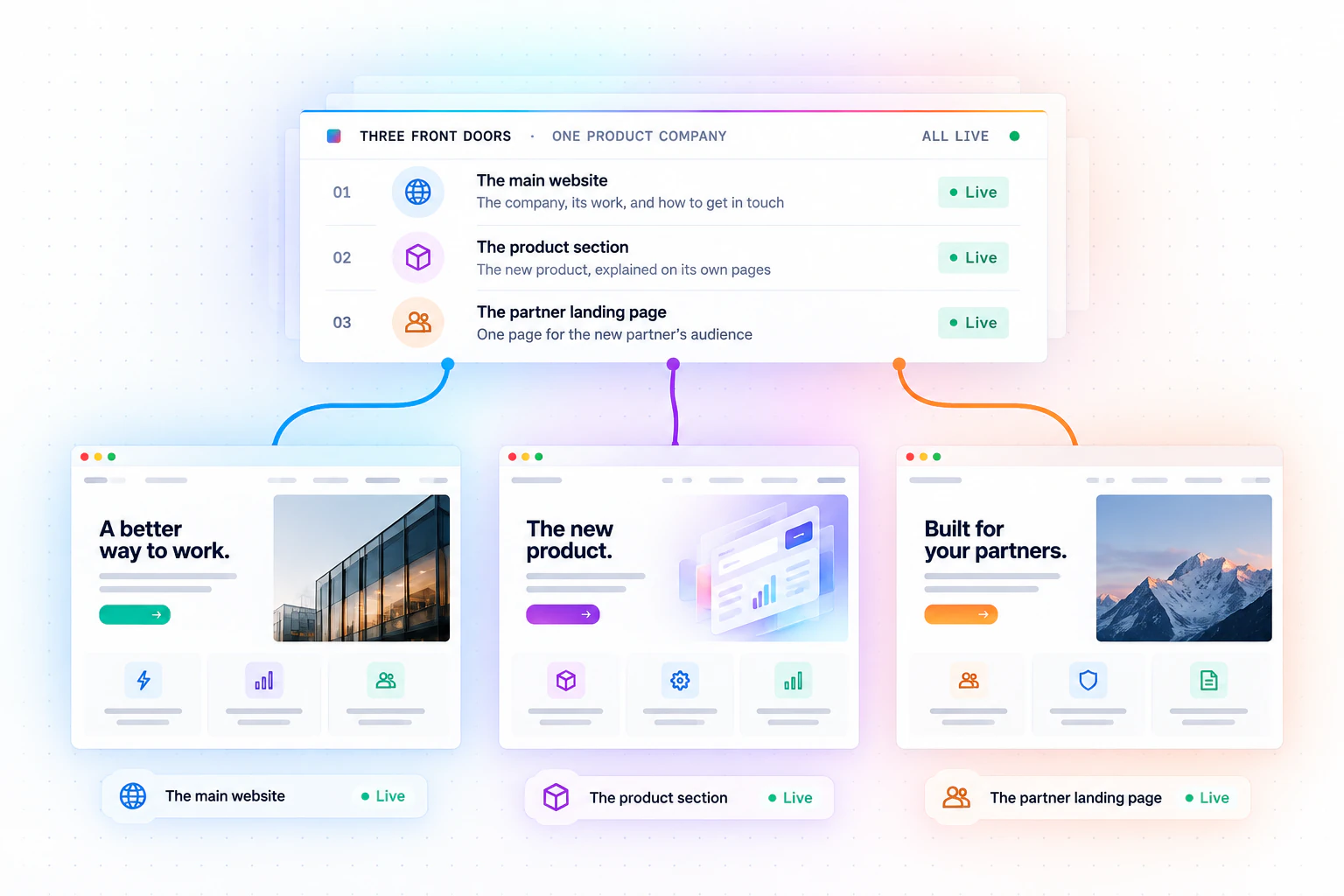
We built their main website, a section for the new product, and a landing page for the partner.
Where it is now
All three are live.
Three front doors for one product company, all live: the main website covering the company, its work and how to get in touch; a product section explaining the new product on its own pages; and a single landing page for the new partner’s audience.
Illustrative example, not the client’s data

In discovery now: a beverage manufacturer and a food producer.

Both are at the start: finding out what is really in the way before anything gets built.

What is in your way?

Thirty minutes with a founder. If we cannot help, we will say so.